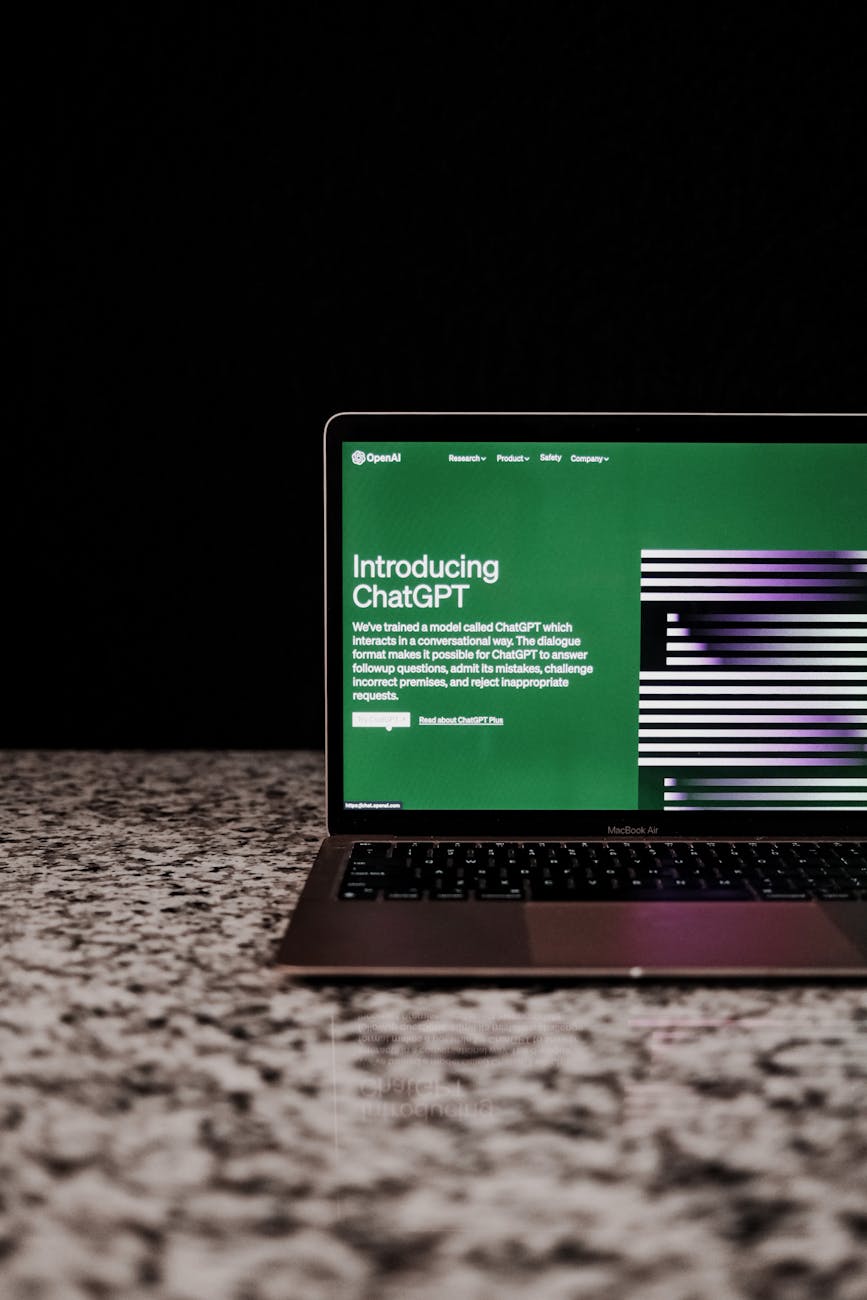
You’ve heard the name approximately four hundred times in the last year. Your nephew won’t stop talking about it. Your boss sent a company-wide email about it. A news segment compared it to the invention of the internet, and then the next segment said it was going to destroy civilization.
So what actually is it?
Here’s the honest, plain English version — no computer science degree required.
It’s a Very Well-Read Autocomplete
The simplest way to understand ChatGPT is this: it read an enormous amount of human writing — books, articles, websites, conversations, research papers — and learned the patterns of how words, ideas, and sentences fit together.
When you ask it a question, it doesn’t look up the answer in a database. It generates a response word by word, predicting what a useful, coherent answer would look like based on everything it learned. Think of it as autocomplete on your phone, except instead of suggesting the next word in a text message, it can suggest the next thousand words in a thoughtful essay.
That’s genuinely impressive. It’s also important to understand, because it explains both why ChatGPT can seem so smart and why it sometimes confidently says things that are completely wrong.
What It Can Actually Do
ChatGPT is useful in ways that are easy to underestimate until you try it. It can draft an email you’ve been putting off for three days in about thirty seconds. It can explain a medical diagnosis in language that actually makes sense. It can summarize a long document, help you write a cover letter, answer questions about a recipe, plan a trip, or talk through a problem you’re trying to solve.
For knowledge workers — people whose jobs involve writing, analyzing, communicating, or making decisions — it functions like a capable assistant who never sleeps, never gets frustrated, and has read more than any human alive.
For seniors navigating an increasingly complex digital world, it can be a patient, judgment-free resource that explains confusing things without making you feel foolish for asking.
What It Cannot Do
This part matters just as much. ChatGPT cannot access the internet in real time unless specifically given that ability. It does not know what happened yesterday. It can fabricate facts, dates, names, and citations and present them with complete confidence — this is called hallucination, and it happens more than most people realize.
It has no common sense in the human sense of the word. It has no real understanding of consequences. It cannot verify whether what it’s telling you is actually true. And it has no memory between conversations unless you specifically set that up.
It is a powerful tool. It is not a reliable authority. Treat it like a very well-informed first draft, not a final answer.
Who Made It and Why Does It Cost Money
ChatGPT was built by a company called OpenAI, based in San Francisco. The basic version is free and genuinely useful. A paid version called ChatGPT Plus costs around $20 a month and gives access to more powerful versions of the underlying model.
There are competitors — Google has Gemini, Anthropic has Claude, Meta has its own version — and they all work on similar principles. The differences matter for specific use cases but for everyday use they’re more similar than they are different.
Should You Be Using It
Probably, yes — with reasonable caution. The people who understand these tools are increasingly at an advantage over those who don’t, whether in the workplace, in managing their finances, or simply in navigating daily life more efficiently.
The learning curve is minimal. You type a question or request in plain English, the same way you’d ask a knowledgeable friend. You read the response critically, the same way you’d verify anything you read online. You use it to help you think, not to think for you.
The goal isn’t to become an AI expert. The goal is to not be caught off guard by a technology that is quietly changing how most things work.
Starting with five minutes of curiosity is enough.
Get the Weekly AI Digest free — every week we break down what’s changing and what it actually means for you. Plain English, no hype.
Leave a Reply